


Preface
Chenille patches offer a unique and textured way to personalize and embellish clothing, accessories, and home décor. With their soft, fuzzy feel and versatility, chenille patches have become popular in both fashion and design. This guide covers everything you need to know about chenille patches, from their definition and uses to application tips and maintenance.
1. What is a Chenille Patch?
A chenille patch is a decorative fabric piece made from chenille yarn, which has a raised, fuzzy texture. The name “chenille” comes from the French word for caterpillar, which describes the yarn's fuzzy appearance. These patches are often used to embellish clothing, accessories, and home décor, adding texture and dimension to otherwise flat fabrics.
2. Common Uses of Chenille Patches
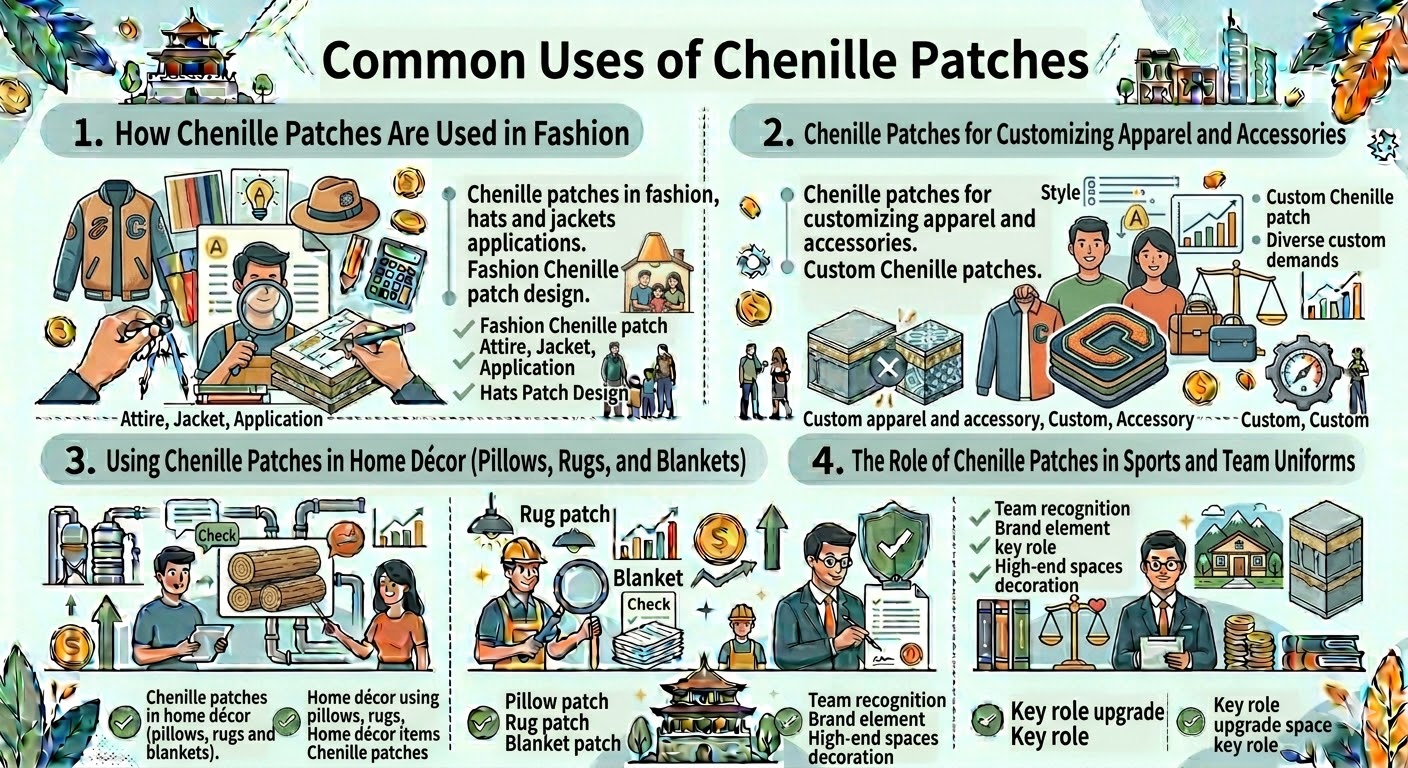
- Chenille patches are often used to add designs, logos, or letters to clothing, hats, jackets, and other fashion items. They're a popular choice for varsity jackets, custom shirts, and even shoes, as they add a personalized touch to the garment.
- From custom jackets to bags, chenille patches allow individuals to express their unique style by adding text, logos, or images. These patches can be personalized to fit individual preferences or a specific brand identity.
- Chenille patches aren’t just for clothing; they can also be applied to home décor items. Adding chenille patches to pillows, blankets, or rugs can enhance the texture and style of the room.
- Chenille patches are often used in sports uniforms for teams to display their logos, mascots, or letters. The raised, textured appearance makes the team branding stand out, giving it a vintage or collegiate look.
3. Types of Chenille Patches
- Standard Chenille Patches vs. Custom Chenille Patches:
Standard chenille patches are pre-made and feature common designs like letters or logos. Custom chenille patches, on the other hand, allow for personalized designs, colors, and text to fit the specific needs of a client or brand. - Different Embroidery Styles in Chenille Patches:
Chenille patches can vary in embroidery style, including solid designs, outlined letters, or intricate patterns. The style you choose will depend on the effect you want to achieve and the message you want to convey. - Popular Chenille Patch Designs:
Popular chenille patch designs include letters (e.g., initials or monograms), logos (e.g., sports teams, brands), and creative illustrations (e.g., animals, abstract shapes). These designs are usually bold and easy to read, making them a statement piece on any garment or accessory. - How to Choose the Right Type of Chenille Patch for Your Project:
When choosing a chenille patch for your project, consider factors such as the design’s complexity, the material of the garment or item, and the desired placement of the patch.
4. How Are Chenille Patches Made?
- The Materials Used in Chenille Patch Production:
Chenille patches are made from chenille yarn, which is often made of cotton, polyester, or a blend of both. The yarn is woven to create a textured, fuzzy surface. - The Embroidery Process Behind Chenille Patches:
The process of making chenille patches involves embroidery where chenille yarn is stitched onto a backing fabric in a way that gives it a raised, fluffy look. - How Chenille Patches Are Attached to Fabrics:
Chenille patches can be attached to fabrics via iron-on, sew-on, or stick-on methods.
5. How to Apply a Chenille Patch
- Ironing on Chenille Patches:
Place the patch on the fabric and use a hot iron to bond the patch. - Sewing Chenille Patches:
Sew the chenille patch to the fabric for a more secure attachment. - Alternative Methods of Attaching Chenille Patches:
Some chenille patches come with adhesive backing or Velcro for easy application.
6. Advantages of Using Chenille Patches
- Chenille patches are highly durable and resistant to wear and tear, especially when properly applied.
- The raised texture of chenille patches adds a luxurious and tactile element to garments.
- Chenille patches are easy to customize, offering various design options for creative expression.
7. Chenille Patch Care and Maintenance
- Wash items with chenille patches in cold water and avoid harsh chemicals.
- Keep items with chenille patches away from excessive friction or sharp objects that could cause damage.
- Store items with chenille patches in a cool, dry place to maintain their shape.
8. Popular Chenille Patch Designs and Trends
- Chenille patches are particularly trendy in streetwear and vintage styles.
- Bold letters, team logos, and creative illustrations are popular choices for chenille patch designs.
9. Where to Buy Chenille Patches
- Chenille patches can be found on online retailers like Etsy and Amazon.
- Custom chenille patch manufacturers offer bespoke options for personalized designs.
Common QA
Q1: What is a chenille patch?
A: A chenille patch is a fabric decoration made from chenille yarn, known for its raised, fuzzy texture. These patches are often used for adding designs, logos, and letters to clothing, accessories, and home décor.
Q2: How are chenille patches made?
A: Chenille patches are created through an embroidery process that uses chenille yarn to create a textured design. The patches can then be attached to fabrics via ironing, sewing, or adhesive methods.
Q3: Can I customize chenille patches?
A: Yes, chenille patches can be customized with different designs, letters, logos, and colors. Many companies offer custom patch creation services for unique designs.
